
Serving Laurel, MD and Nearby Area
Water Damage Restoration in Laurel, MD
A pipe let go, the basement took on water, or the ceiling is dripping. Call us and a crew starts on extraction and drying before the damage spreads into framing, insulation and drywall.
Call (301) 786-0888See our services
- Emergency calls taken 24 hours a day
- Office hours Monday through Friday, 9:00 AM to 6:00 PM
- Moisture readings logged until the structure is dry
- Houses, apartments and small commercial buildings
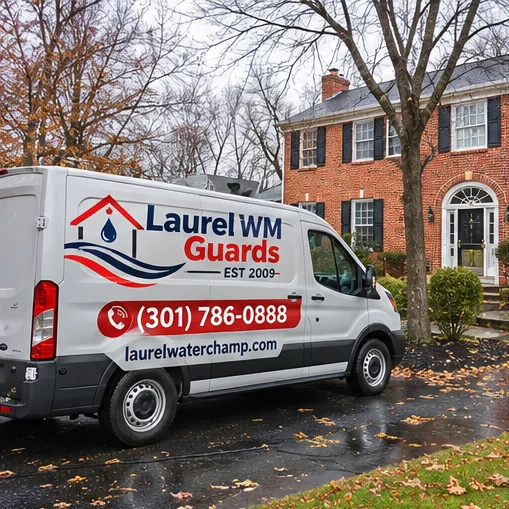
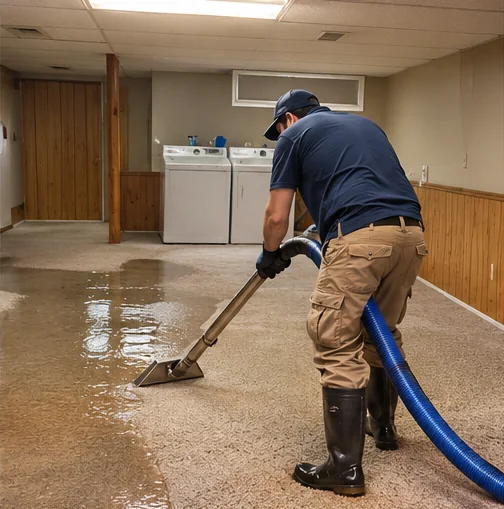
A local crew for flooded basements and burst pipes
Laurel WM Guards handles water damage in Laurel and the communities around it, across parts of Prince George's, Howard, Anne Arundel and Montgomery counties. The work comes down to four jobs. Get the water out. Pull out what cannot be saved. Dry what can. Check that it is dry before anyone rebuilds.
Most calls start with what you see, where the water came from and how long it has been sitting. Those answers tell us what equipment to bring and whether this is a plain drying job.
Our water damage restoration, extraction & drying services in Laurel, MD
These are the jobs we handle. Pick the one closest to your problem.
Extraction, removal, drying and a documented dry structure.
Pumps and extractors on standing water before it soaks in.
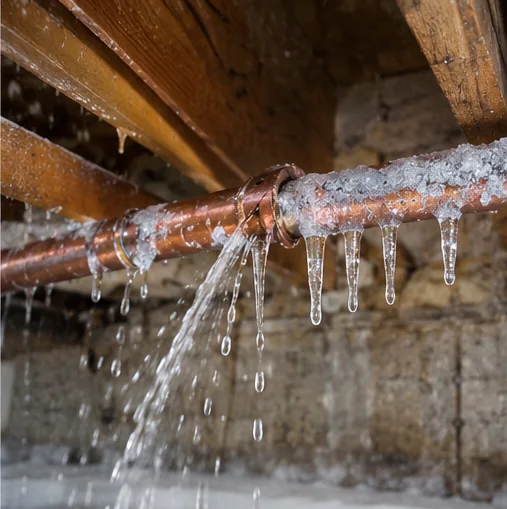
Winter ruptures in basements, crawlspaces and exterior walls.
Offices, shops and rental buildings, with as little downtime as the loss allows.
Containment and removal where moisture has sat long enough to grow.
Seepage, sump failures and storm water in finished and unfinished basements.
Standing water and damp framing under the house.
Fans and dehumidifiers run until the readings say the wood is dry.
Category 3 water removed, then the area cleaned and sanitized.
Leaks from above, wet insulation and sagging drywall.
Runoff, overflow and heavy rain that finds its way inside.
Failed hoses, dishwashers and tank water heaters.
What happens after you call Laurel WM Guards
This is the order of work on a typical loss around Laurel. It shifts with the water category and what the building is made of.
The phone call
We ask where the water started, how long ago, and which rooms are wet. If a supply line is still running, we tell you how to shut it off.
Arrival and moisture mapping
A crew member checks floors, walls and ceilings with moisture meters and marks the wet boundary. That map is the baseline for everything after it.
Water extraction
Pumps and extractors pull standing water first. Soaked carpet and pad come up fast, because pad holds water against the subfloor.
Removal of what cannot be saved
Wet drywall, insulation and flooring that will not dry in place are cut out and bagged.
Drying setup
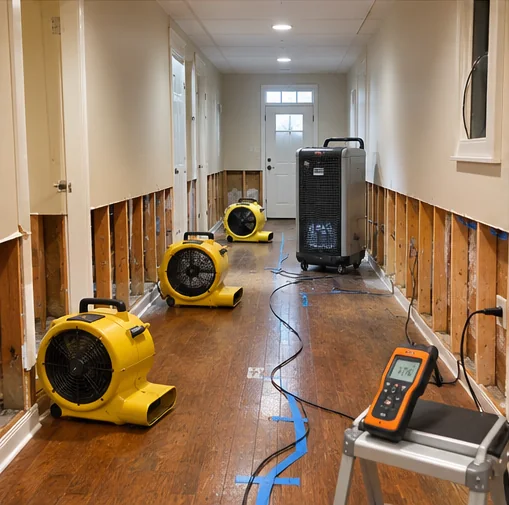
Drying equipment goes in, placed from the moisture map. Wall cavities are opened or vented when the readings call for it.
Monitoring
Readings are repeated on later visits and compared with the first map. Equipment stays until the wet materials read dry.
Not all water is the same
The industry standard for this work, ANSI/IICRC S500, sorts water into three categories by where it came from. The category decides what can be dried and what has to be thrown away.
Category 1
Clean water supply
Broken supply line, burst pipe, tub or sink overflow.
Risk: low at first. Can slide into Category 2 if it sits.
Category 2
Gray water
Washing machine or dishwasher discharge, toilet overflow with urine only, sump pump overflow.
Risk: moderate. Contaminants are present, and porous materials often come out.
Category 3
Black water
Sewage backup, rising flood water, creek or river water.
Risk: high. Carries pathogens. Porous materials come out and the area is cleaned and sanitized.
CleanerMore contaminated
Time matters too. Clean water that sits long enough, especially in a warm room, can be reclassified as Category 2.
Water risk around Laurel, season by season
The Laurel Historical Society places the town on the fall line of the Patuxent River, where hard Piedmont rock gives way to Coastal Plain sediments that include clay, as the Maryland Geological Survey describes it. The river has come into town before. The National Weather Service lists a June 1972 crest of 25.00 feet on the Patuxent near Laurel during Hurricane Agnes, and a 2012 report noted the gauge had not topped 15 feet since 1975.
| Problem | Jan | Feb | Mar | Apr | May | Jun | Jul | Aug | Sep | Oct | Nov | Dec |
|---|---|---|---|---|---|---|---|---|---|---|---|---|
| Freeze breaks and ice dams | yes | yes | yes | yes | ||||||||
| High water table, basement seepage | yes | yes | yes | yes | yes | yes | ||||||
| Thunderstorm flooding, humid crawlspaces | yes | yes | yes | yes | ||||||||
| Hurricane season remnants | yes | yes | yes | yes | yes | yes | ||||||
| Leaf-clogged gutters | yes | yes |
Homes, rentals and small businesses in Laurel and nearby
Homeowners usually call about one room. Landlords call about a unit and the one below it. Business owners call about a shop floor and want to know when they can reopen. The commercial page handles that side.
Moisture readings and photos go into the drying record on every job, and adjusters generally ask for it.
Around Laurel the housing changes from one community to the next. South Laurel has single-family subdivisions beside rental apartment buildings. West Laurel is almost all owner-occupied single-family homes. Maryland City and Russett have rows of townhomes on tree-lined streets, and the Burtonsville crossroads is shops and restaurants.
What often goes wrong in older houses
County planners described about 85 percent of the homes in West Laurel as built before 1980, nearly half in the 1960s (a 2006 estimate). Older plumbing and older basements fail in familiar ways.
Supply lines and fittings
Old joints, braided washer hoses and plastic fittings split without warning. A slow drip inside a wall can run for weeks.
Water heaters
Tanks corrode from the inside and leak at the base. A rusty seam or damp patch is the late warning.
Sump pumps
A power cut or a stuck float lets groundwater in at the slab and wall joints. See basement flood cleanup.
Frozen lines
Crawlspace and exterior-wall pipes freeze first, and the break often shows after the thaw. See frozen and burst pipe cleanup.
Clay soil and grading
Clay holds water against foundation walls after a hard rain. Poor grading gives it a way in.
Roof and gutter leaks
Clogged gutters and ice dams push water under shingles and into ceilings.
What water damage work costs in the Laurel area
Price depends on how much area is wet, the water category, the materials, the days of drying and whether mold is present. The final price is set after we see the loss. General ranges are on the pricing page.
Around Laurel, older houses with finished basements and ground that stays wet in spring tend to add work, because more material has to be opened up and dried. The same factors apply in Prince George's, Howard, Anne Arundel and Montgomery counties.
Before the crew arrives
- Shut off the water at the fixture or the main, if you can reach it safely.
- Turn off power to wet areas at the breaker, but only if the panel is dry. Stay out of standing water near outlets.
Drying is measured, not guessed
A floor can look dry and still hold moisture in the subfloor, the bottom plate of a wall and the insulation behind the baseboard. Surface checks miss that. We take readings in the same spots on each visit and compare them with the first map.
Equipment runs until the readings match dry reference points from parts of the building the water never touched. See structural drying.
Questions we get on the first call
How fast can mold start after a leak?
Mold can begin to grow within 24 to 48 hours on materials that stay wet. That is why extraction and drying start right away. See mold removal if you already see growth.
Can I dry carpet and drywall myself with fans?
Fans help on a small clean-water spill caught early. They do not reach moisture inside walls or under the pad. If the water was gray or black, call before you pull anything out.
Will my homeowners insurance pay for this?
Coverage depends on your policy and on what caused the water. A sudden pipe burst is treated differently from slow seepage or flood water. Call your insurer first. We cannot give legal or coverage advice.
How do I know the structure is actually dry?
By readings at the spots mapped on the first visit, compared with dry reference readings from untouched parts of the building. A floor that feels dry to the hand can still be wet underneath.
Do you handle sewage backups?
Yes. Sewage is Category 3, so porous materials typically come out and the area is cleaned and sanitized. Keep people and pets away until it is finished. See sewage backup cleanup.
Send us a message from Laurel or nearby
For anything that can wait until office hours. If water is running right now, call (301) 786-0888 instead.
Where we work around Laurel, MD
Serving Laurel, MD and Nearby Area. Laurel sits in northern Prince George's County, close to the Howard, Anne Arundel and Montgomery county lines. Each nearby community has its own housing and ground conditions, so each has its own page.
- South LaurelPrince George's County
- North LaurelHoward County
- Maryland CityAnne Arundel County
- West LaurelPrince George's County
- BurtonsvilleMontgomery County
From the blog
- November 2, 2026Ice dams and ceiling leaks in Maryland winters
- October 28, 2026Keeping pipes from freezing during a Maryland cold snap
- October 14, 2026The first hour after a pipe bursts
Water in the building right now?
Call (301) 786-0888. Emergency calls are taken 24 hours. Office hours are Monday through Friday, 9:00 AM to 6:00 PM. You can also write to info@laurelwaterchamp.com or use the contact page.
Call (301) 786-0888