
Serving Laurel, MD and Nearby Area
Mold Removal in Laurel, MD
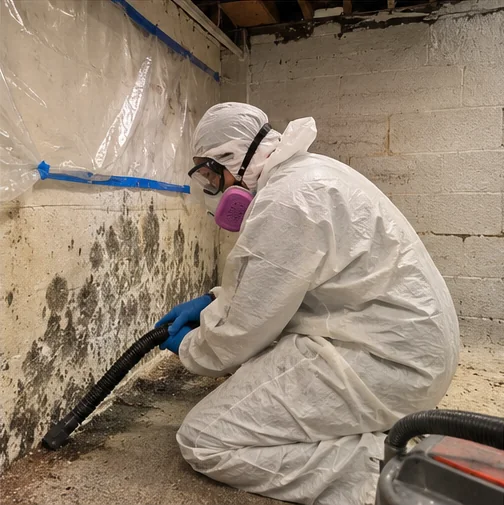
Mold can start growing on wet materials within 24 to 48 hours, and what shows on a wall is often the smaller part of it. We find the moisture, contain the area, remove what is growing and dry what is left.
Call (301) 786-0888See pricing
- Containment with negative air before removal
- HEPA vacuuming and cleaning of what stays
- Moisture source traced first, so it does not return
- Emergency calls taken 24 hours a day
The 24 to 48 hour window
Mold spores are in every house. What they need to start growing is moisture, a food source such as drywall paper or wood, and time. Under those conditions growth can begin within 24 to 48 hours. That is why drying starts as soon as we arrive, and why a leak that was dried quickly rarely turns into a mold job.
| How long materials stay wet | What can happen | What it means for the work |
|---|---|---|
| Up to 24 to 48 hours | Growth can begin on wet porous materials. Smell may not be noticeable yet. | Fast drying often prevents it. |
| A few days | Visible spots, staining or a musty smell on drywall, carpet backing and wood. | Affected porous materials are often removed. |
| Weeks | Spread into framing, insulation and the backs of finished surfaces. | Containment, removal and cleaning of a larger area. |
What feeds mold in a Laurel, MD house
Mold does not need a flood. A slow drip inside a wall does it. So does condensation on a cold duct, a crawlspace that stays damp through July, a bathroom with no working fan, or a basement wall that wicks groundwater all spring. The fix for any of these starts with the water. Taking out mold and leaving the moisture is a short-term cleanup that will come back.
Around Laurel, the usual places are basements after a wet spring and crawlspaces through a humid summer. The USDA describes the Christiana soil, first described in Prince George's County, as carrying a seasonal high water table 20 to 40 inches down from November to April, and Mid-Atlantic summers keep crawlspace air damp. Older houses, like those on our West Laurel page, are where those weak points tend to show up.
Think you have mold?
Call before you scrub or spray. We will ask where the water came from and what you are seeing.
Call (301) 786-0888How mold removal works in Laurel, MD
Find and stop the moisture
We trace the leak or the damp area with moisture readings. If there is an active leak, a plumber or roofer fixes it first.
Set up containment
Plastic sheeting seals the work area from the rest of the house. A fan exhausts air from inside, so the pressure pulls air in through the gaps rather than pushing dust out.
Remove the affected materials
Drywall, insulation, carpet and pad with growth are cut out, bagged and carried out through the sealed route. Framing is cleaned or sanded depending on how far growth went.
Clean and vacuum
Remaining surfaces are wiped and vacuumed with HEPA-filtered equipment to pull up spores and dust.
Dry everything
Dehumidifiers and air movers bring the cleaned structure to dry readings. It does no good to clean a wet frame.
Check before rebuilding
A final moisture check and a visual look confirm the area is dry and clean before it is closed in again.
Do this, and skip this, until we arrive
- Do not disturb the growth. Brushing or scraping sends spores into the air.
- Do not spray bleach. It does not penetrate porous surfaces and it adds more water.
- Turn off fans that blow across the area. Do not run the HVAC if the system has been exposed.
- Keep children, pets and anyone with breathing problems out of the room.
- Take pictures of the growth, and note when you first noticed it.
EPA guidance treats about 10 square feet as the point where a cleanup stops being a small household job. Past that, or if it is inside walls, it is time for a trained crew.
What happens to the air during removal
Disturbing mold throws spores into the air, so the work is built around controlling that. The sealed area stays under negative pressure while the work goes on. People working inside wear respirators and disposable coveralls. Debris is bagged inside the containment before it is carried out. When the cleaning is done, the plastic comes down slowly, and the area is vacuumed again. None of this is complicated, but skipping it spreads the problem into rooms that were clean.
Signs of mold you have not found yet
- A musty smell that comes and goes with the weather.
- Stains on the ceiling below a bathroom or above a window.
- Peeling paint or wallpaper that will not stay put.
- Rust or water marks on the back of a cabinet.
- Allergy symptoms that ease when you leave the house.
None of these proves mold. All of them are reasons to check the moisture behind the wall.
How much does mold removal cost?
Mold jobs vary more than almost any other water damage work, because the cost depends on how far the growth went and where it is. The numbers below are estimated ranges for typical pieces of the job. They are not final prices, and the price for your house is set after we look at it and take moisture readings.
| Service | Estimated range | What it covers |
|---|---|---|
| Typical total, small to moderate job | $1,500 to $9,000 | National cost guides put most mold jobs in this band |
| Small contained area, one room | $1,000 to $4,000 | Containment, removal of affected material, HEPA cleaning |
| Basement wall or block area | $1,500 to $4,000 | Larger containment, cleaning masonry, drying afterward |
| Crawlspace joists and subfloor | $1,000 to $5,000 | Insulation removal, cleaning or sanding wood, drying |
| Growth inside a wall or ceiling | $1,500 to $12,000 or more | Opening the wall, removal and cleaning, with rebuilding separate |
| Drying after removal | $800 to $3,000 | Dehumidifiers, air movers and daily readings until dry |
What moves a mold price up or down:
- Size of the affected area, and how much of it is behind finished surfaces.
- Location. An open basement wall is simpler than growth inside a wall cavity or above a ceiling.
- Material. Drywall and carpet usually come out, while framing and block can often be cleaned.
- The moisture source. If a leak is still active, a plumber or roofer has to fix it first.
- Containment and air filtration needed to keep spores out of clean rooms.
- Drying days after the removal is finished.
- Testing, if an insurer, a lease or a buyer wants it. Independent testers charge separately.
Rebuilding after removal is a separate stage. The pricing page has general ranges for other kinds of water damage work.
Mold removal questions and our answers
Do I need a mold test first?
Not always. If you can see it and the cause is a known leak, removal and drying go ahead without a test. Testing makes sense when there is a smell and no visible source, or when an insurer or a lease requires it. Independent testers do that work, not the crew removing it.
Is black mold more dangerous than other colors?
You cannot judge by color. Several kinds are black or dark green. Treat all growth the same way: find the water, contain it and remove it.
Will the mold come back?
Not if the moisture is gone. If the source is still there, such as a leaking line or a wet crawlspace, it will return, and we will say so before we start.
Does insurance cover mold removal?
It depends on the policy and on whether the water came from a covered event. Many policies limit mold coverage. Ask your insurer before the work begins.
Can I stay in the house during removal?
For a small, sealed area, often yes. For larger jobs or anything near the HVAC, we may recommend staying elsewhere for a day or two.
What to read next
- Water Damage Restoration Dealing with the water first.
- Structural Drying & Dehumidification How moisture is brought down to dry readings.
- Crawlspace Water Removal & Drying A common place for hidden moisture.